Foundations
The initiative to establish a permanent regional military medical hub began during the ADMM-Plus Experts' Working Group on Military Medicine cycle co-chaired by Thailand and the Russian Federation.
About ACMM
“One Region, One Military Medical Teamwork”
Mission / Objectives
To establish practical, effective, and sustainable cooperation among the military medical services of ASEAN Member States and Plus Countries in both normal and crisis situations.
Mission: To establish practical, effective, and sustainable cooperation among the military medical services of ASEAN Member States (AMS) and Plus Countries in both normal and crisis situations.
General Objectives: To demonstrate regional solidarity by integrating capacities to respond to common regional challenges; to coordinate with ADMM-Plus military medical services, international organizations, and related agencies to improve and standardize capabilities; and to harmonize unique regional capabilities while elevating the center's functions to world-class standards.
Specific Objectives: Develop joint regional medical response plans, perform medical needs assessments in crisis situations, and conduct specialized training courses and academic research in emergency medical services.
From an ADMM-Plus initiative to a recognized ASEAN subsidiary body
The initiative to establish a permanent regional military medical hub began during the ADMM-Plus Experts' Working Group on Military Medicine cycle co-chaired by Thailand and the Russian Federation.
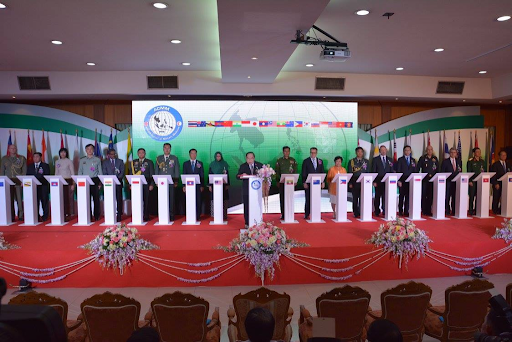
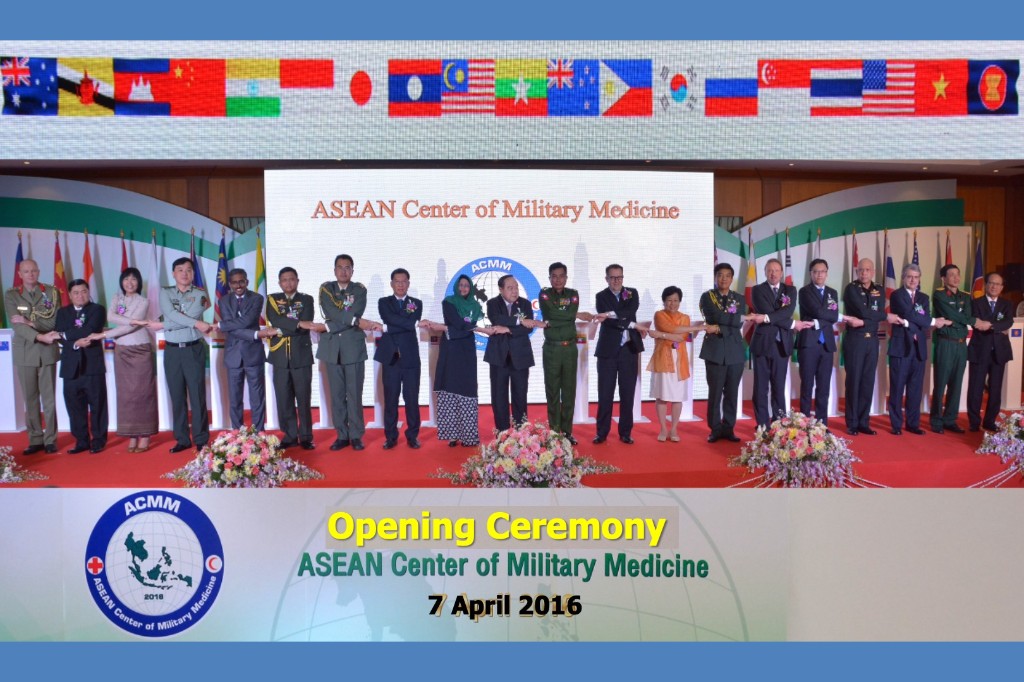
The ASEAN Center of Military Medicine was officially inaugurated on 7 April 2016 at the Royal Thai Army Medical Department in Bangkok, Thailand.
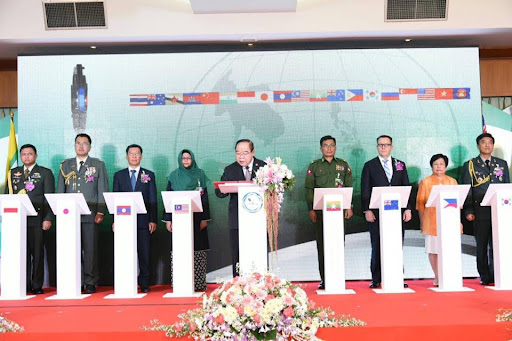
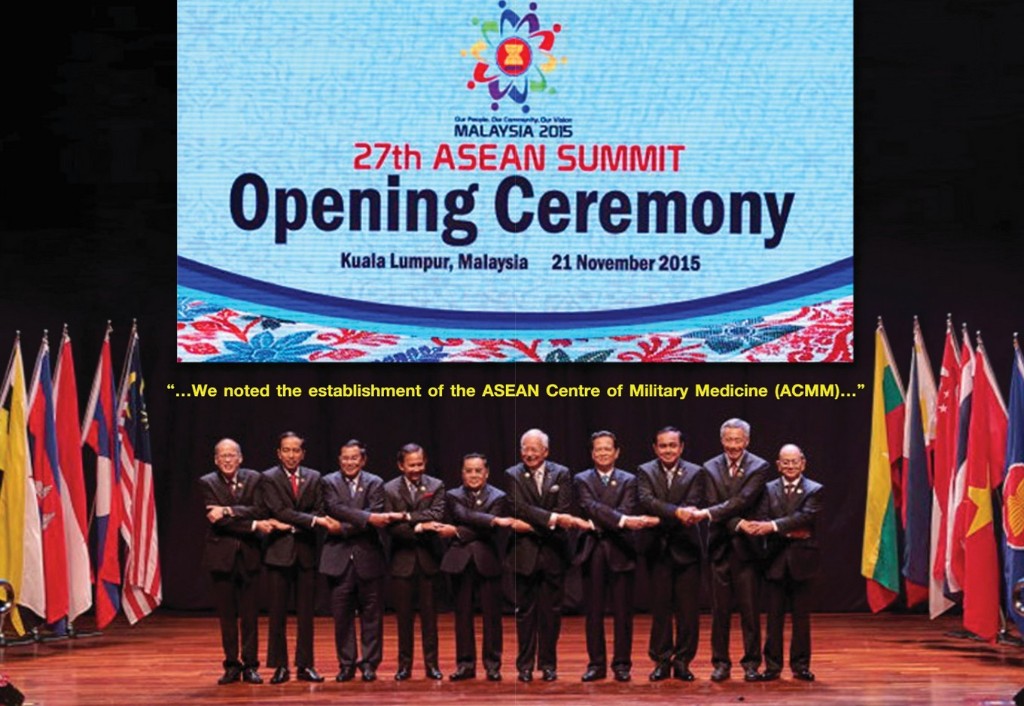
ACMM achieved a major institutional milestone by being officially included as a subsidiary body under Annex 1 of the ASEAN Charter during the 34th ASEAN Summit in June 2019.
Operational objectives that translate ACMM's mission into practical cooperation
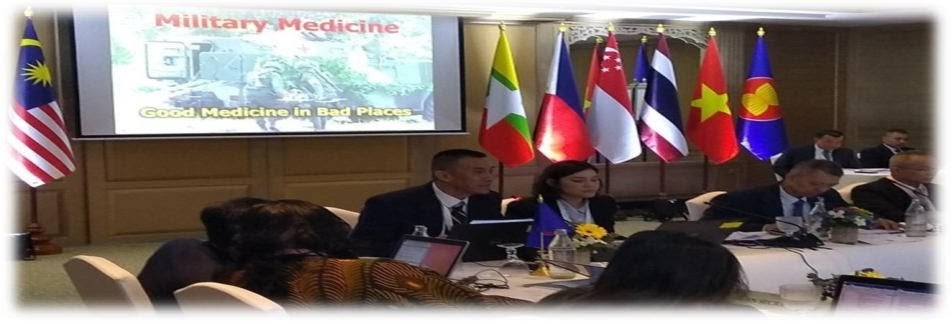
Developing joint regional medical response plans for normal situations, emergencies, and crisis response.
Performing coordinated medical needs assessments to support evidence-based decisions during crisis situations.
Conducting specialized training courses and academic research in emergency medical services.
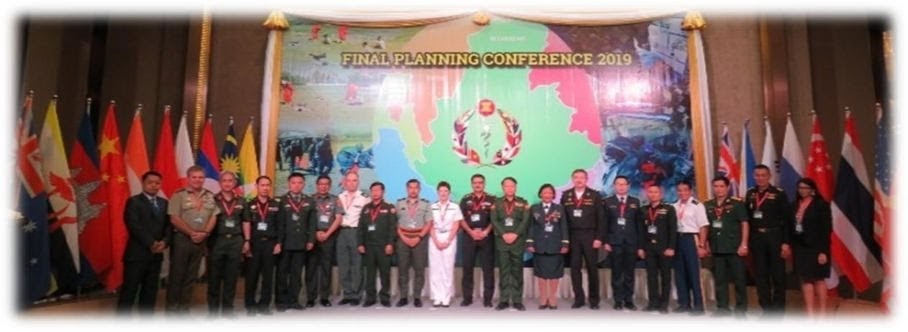
Coordinating with ADMM-Plus partners, international organizations, and related agencies to improve and standardize capabilities.
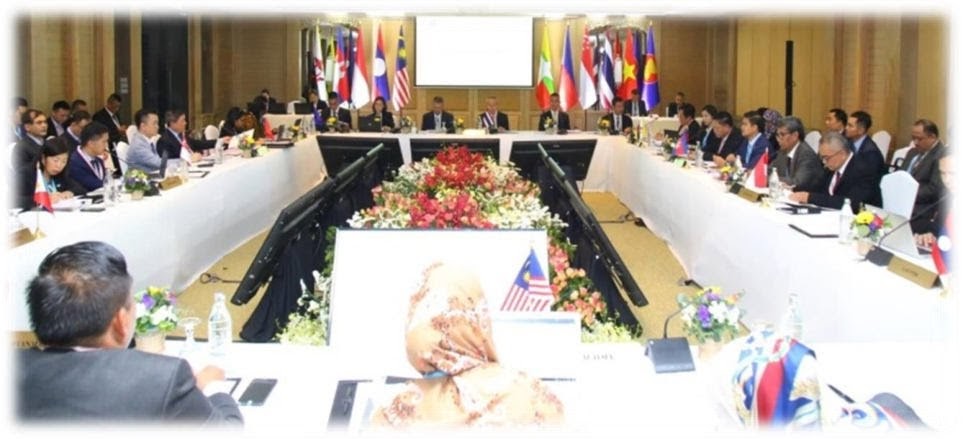
Board of Directors (BOD): The primary policy-making body composed of authorized representatives from the military medical services of all 10 ASEAN Member States.
Secretariat Office: The executive body led by the Secretariat Chief and organized into five specialized sections: Information, Coordination, Planning and Operations, CITS, and Administrative.
Specialized sections: The Information Section supports medical intelligence, data analysis, and AMMAT; the Coordination Section manages communication and joint efforts with Member States and Dialogue Partners; the Planning and Operations Section supports the Strategic Roadmap, joint training, and SOPs; the CITS Section manages information technology, satellite communication, and cyber security; and the Administrative Section oversees human resources, logistics, and financial management under the ACMM FRP.
BOD Chairmanship: The Chairman of the Board of Directors rotates annually, aligning with the country holding the ASEAN Chairmanship.
Secretariat Chief: The center is managed by the Chief of Secretariat, who serves a 4-year term to ensure operational continuity.
Thai service branch rotation: To ensure balanced host-nation representation, the Thai BOD representative and Secretariat Chief roles rotate among the Royal Thai Army, Royal Thai Navy, and Royal Thai Air Force every 2 years.
This structure combines high-level policy guidance with efficient day-to-day operational coordination.
Current priorities and major milestones for the next ACMM phase
As of 2026, ACMM celebrates ten years of advancing integration and shared wisdom for regional medical resilience.
ACMM continues strengthening interoperability, medical readiness, and coordinated response capacity across ASEAN frameworks.
Current leadership names and reference profiles highlighted for the public site